
Why Is SAC305 Solder Paste So Widely Used?

When engineers, purchasing teams and SMT manufacturers evaluate lead-free solder paste, one question comes up repeatedly: why does SAC305 keep appearing as the standard recommendation?
There are lower-silver, silver-free and low-temperature alternatives available. Some may reduce material cost or offer advantages in a particular application. Yet SAC305 continues to be widely selected because it provides a practical balance of printability, wetting, solder-joint reliability, process familiarity and supply availability.
The practical answer: SAC305 is not the lowest-cost alloy and it is not ideal for every specialized application. It remains popular because it has few difficult-to-manage weaknesses in mainstream lead-free SMT production.
What Is SAC305 Solder Paste?
SAC305 is a lead-free tin-silver-copper solder alloy composed of 96.5% tin, 3.0% silver and 0.5% copper. The name “SAC” refers to the three alloying elements, while “305” identifies the 3.0% silver and 0.5% copper content.
Its typical melting range is approximately 217–220°C. The actual reflow profile should still be adjusted according to the flux system, PCB construction, component thermal mass and production conditions.

1. It Offers a Strong Overall Balance
Solder paste selection is rarely based on a single property. A lower-cost alloy may require more process adjustment. A formulation with fast wetting may still perform poorly during long printing cycles. A specialized alloy may solve one reliability problem while adding complexity elsewhere.
SAC305 is widely used because it generally delivers a useful combination of:
- Stable stencil-printing performance
- Consistent reflow behavior
- Dependable wetting and solder spread
- Reliable solder-joint formation
- Broad compatibility with standard SMT processes
It is not necessarily the best alloy in every individual category. Its strength is that it performs well across several categories at the same time.
2. The Industry Already Understands the Process
SAC305 has been used in lead-free electronics manufacturing for many years. Engineers therefore have extensive experience with stencil design, reflow profiling, PCB surface finishes, component compatibility and defect analysis for this alloy system.
When bridging, solder beading, tombstoning, insufficient wetting, voiding or head-in-pillow defects appear, production teams can draw on a large body of established process knowledge. That reduces qualification time and makes troubleshooting more predictable.
For a factory focused on stable output, mature process knowledge has real economic value. A slightly cheaper material is not automatically cheaper once extra validation, downtime and rework enter the calculation.

3. Its Wetting Performance Is Practical for Mass Production
Good wetting helps molten solder spread across pads and component terminations, supporting complete fillet formation and consistent joint geometry. SAC305 is commonly selected because its wetting behavior is dependable across a broad range of conventional SMT applications.
However, alloy composition is only part of the result. Two SAC305 solder pastes can behave differently because performance also depends on:
- Flux chemistry and activity
- Solder powder size and oxidation level
- PCB surface finish and component condition
- Reflow temperature and time above liquidus
- Storage, thawing and handling procedures
The alloy name is therefore a starting point, not a complete product specification. The flux system and process match are equally important.

4. It Covers a Wide Range of Mainstream Applications
SAC305 is used across consumer electronics, automotive electronics, industrial control systems, communication equipment and general PCB assembly. Its established performance makes it a sensible starting point for many projects that do not require an unusually low processing temperature or a highly specialized mechanical property.
This does not mean SAC305 is automatically the best option for every design. Products exposed to severe drop impact, extreme thermal cycling, heat-sensitive substrates or strict material-cost targets may require a different alloy or a modified formulation.

5. It Fits Existing Equipment and Supply Chains
SAC305 is widely available in solder paste, solder wire, solder bar, preforms and solder spheres. Using a familiar alloy family across several processes can simplify material control, supplier communication and quality traceability.
Most modern lead-free SMT lines already have the equipment capability and process foundation required for SAC305. This makes sampling, qualification, replenishment and production transfer relatively straightforward.
Does SAC305 Have Any Disadvantages?
It does. SAC305 contains 3.0% silver, so its material cost is generally higher than that of low-silver or silver-free alloys. Its processing temperature is also higher than that of traditional tin-lead solder and many low-temperature alloy systems.
In specialized applications, another alloy may provide better resistance to drop impact, lower peak-temperature requirements or a more favorable cost structure. SAC305 should therefore be selected through application and process evaluation, not simply because it is familiar.
Its real advantage is not the absence of trade-offs. It is the fact that, for many mainstream lead-free assemblies, those trade-offs are understood and manageable.
Choosing the Right SAC305 Solder Paste
A product marked “SAC305” can still vary considerably in production. Manufacturers should evaluate the complete solder paste system, including:
- T3, T4, T5 or finer powder size
- Stencil-printing, dispensing or jetting requirements
- Fine-pitch transfer efficiency
- Viscosity stability and stencil life
- Residue, voiding and cleaning requirements
- Reflow atmosphere and thermal profile
- Mechanical and long-term reliability targets
Selecting the alloy is only the first step. Consistent production depends on matching the solder paste formulation to the actual PCB, stencil, components and reflow process.
Jufeng SAC305 Lead-Free Solder Paste
Jufeng Solder supplies Sn96.5Ag3.0Cu0.5 SAC305 lead-free solder paste for a range of SMT assembly requirements. Product selection can be matched to the printing method, component pitch, stencil design, reflow process and reliability target.
For an effective recommendation, provide the PCB type, minimum component pitch, stencil thickness, current reflow profile, existing defects and required reliability conditions.
Conclusion
SAC305 remains widely used because it offers a proven balance of process stability, wetting behavior, solder-joint reliability and manufacturing familiarity.
It may not be the lowest-cost alloy or the ideal choice for every specialized assembly. For a large share of conventional lead-free SMT production, however, it remains one of the most practical and predictable options available.
How to Choose the Right Solder Preforms for Precision Soldering
Why Can’t I Solder Tiny SMD Components? 0.1mm Ultra-Fine Solder Wire Explained
Related Article
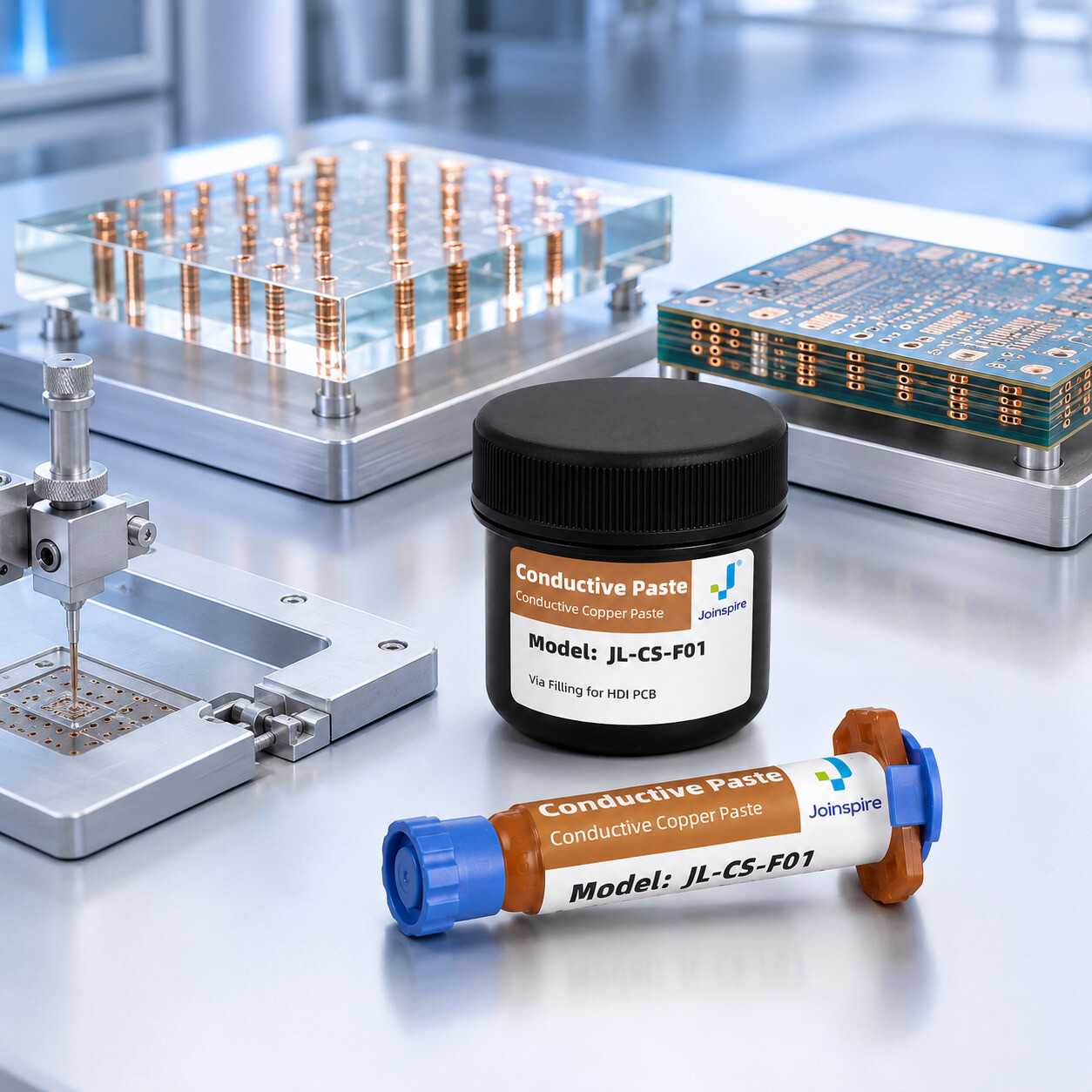
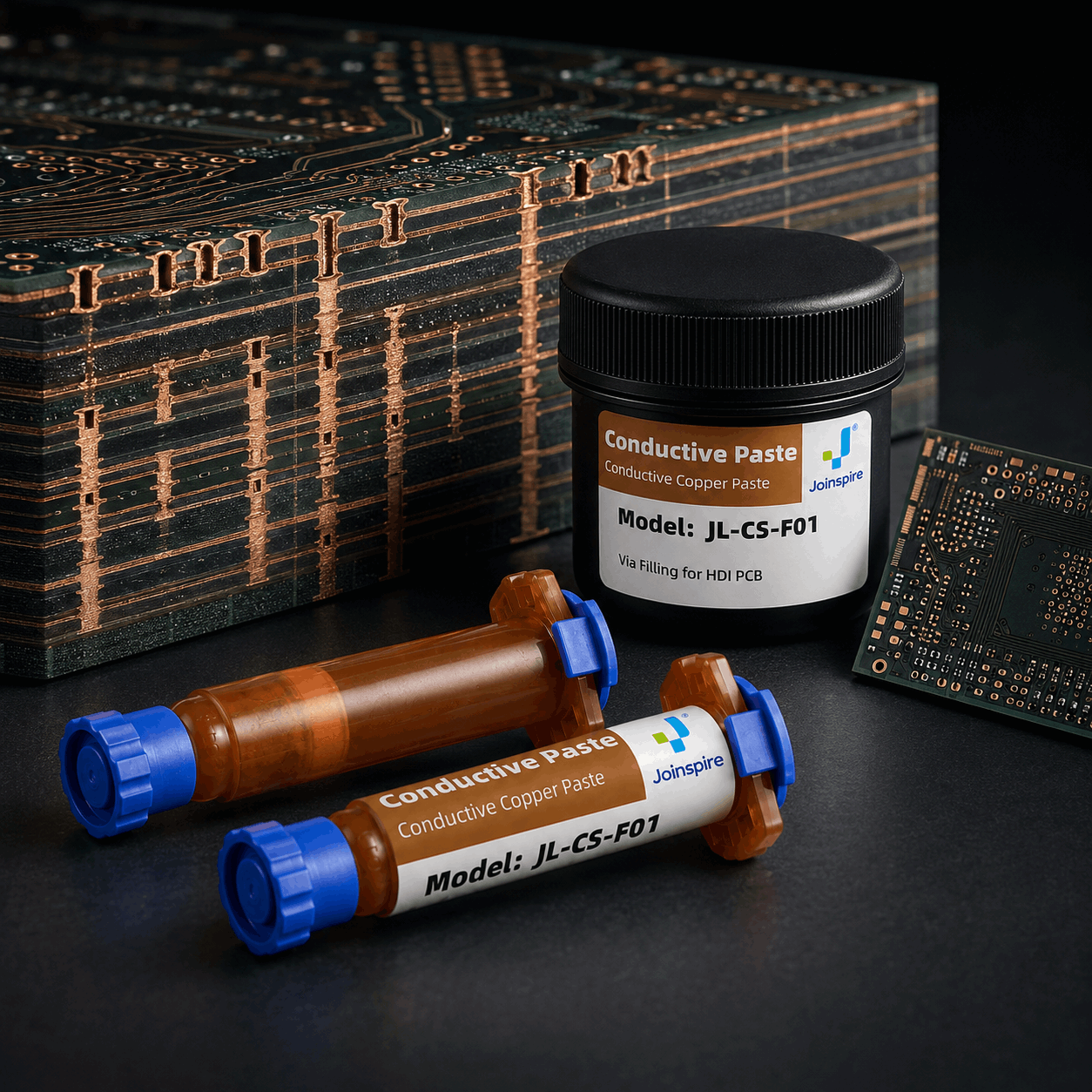

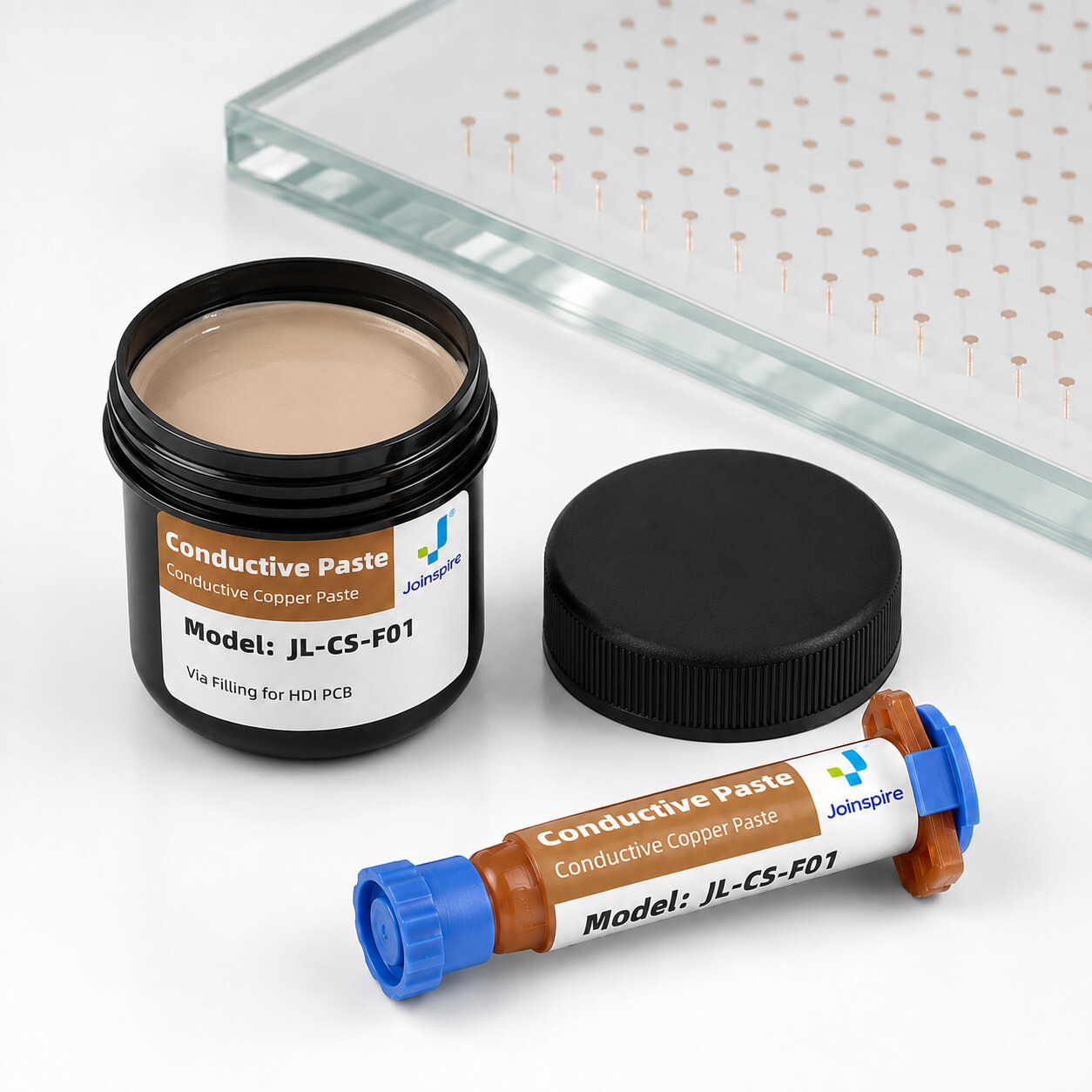
Jufeng JL-CS-F01 copper via filling paste is a single-component conductive resin material developed for via plugging and filling.
