Focusing on Large-Area Silver Sintering for SiC Power Modules: Joinspire Reveals the Key Solution
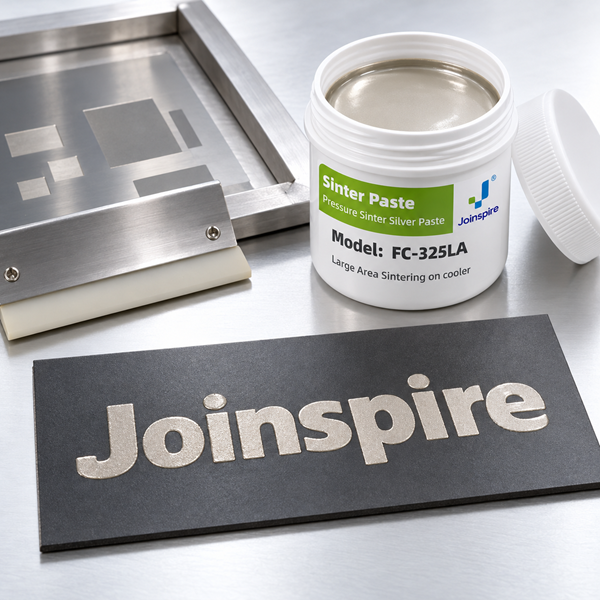
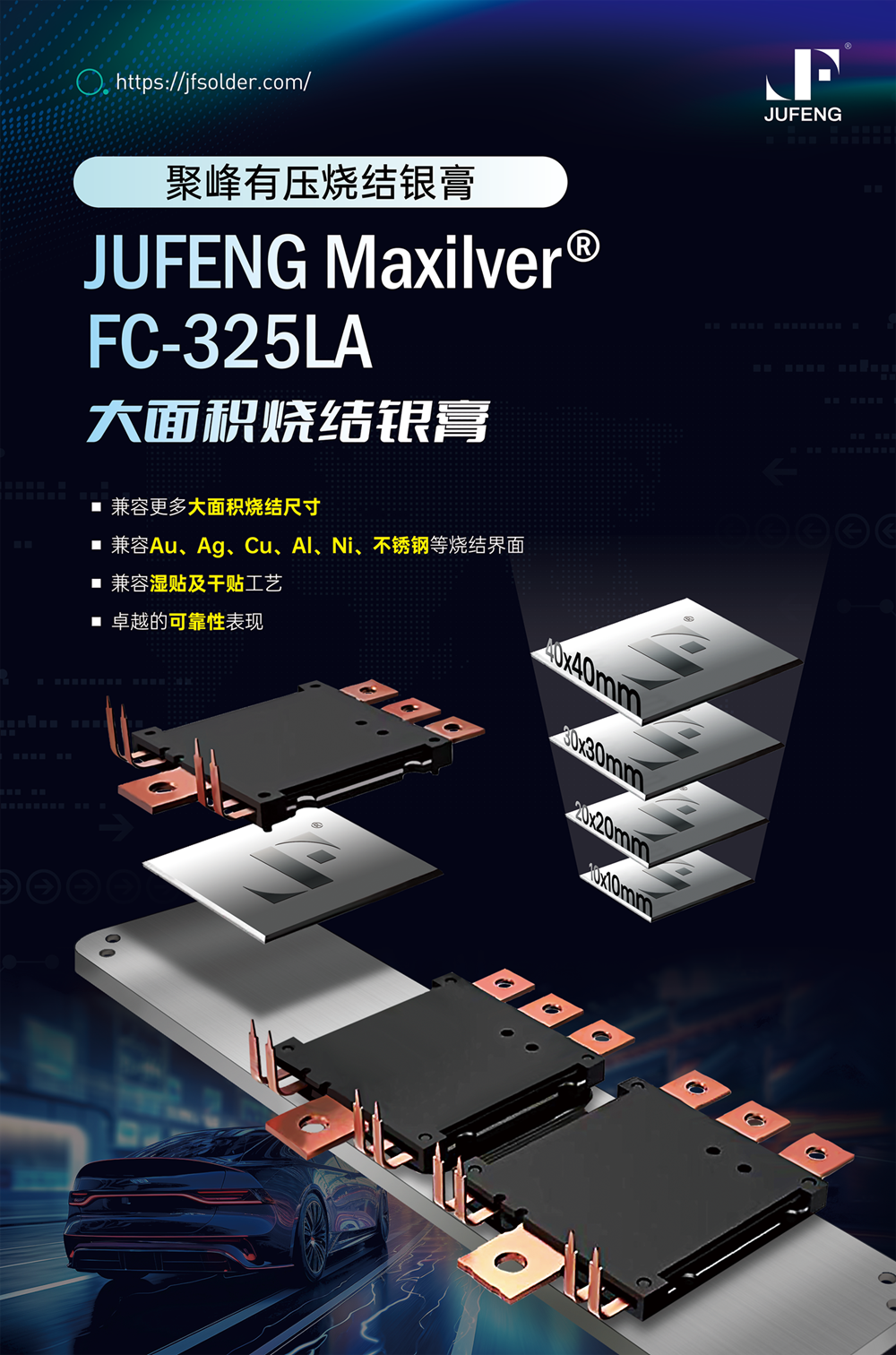
Recently, Joinspire New Materials announced the launch of FC-325LA pressure silver sinter paste, developed to meet the large-area silver sintering process requirements of silicon carbide power module manufacturers.
With high reliability and stability, FC-325LA samples showed no voids, cracks or delamination after 1,000 thermal cycling tests, demonstrating excellent performance in demanding packaging applications.
 .
.So, what requirements does SiC power module packaging place on large-area silver sintering? And how does Joinspire’s new product ensure process stability? The answer lies in the following key points.
From Small Die Attach to Large-Area Power Module Packaging
Silver sintering technology was first applied to small-size chip die attach packaging. However, with the rapid development of power electronics, this technology has gradually expanded to large-area packaging for power modules, especially in SiC power module packaging.
As the sintering area increases and process complexity rises, the requirements for process control become much stricter.
Key Requirements for Large-Area Silver Sintering
Sintered Layer Density
The sintered silver layer must be highly dense and free of voids or cracks to ensure stable conductivity, bonding strength and long-term reliability.
Thermal Shock Resistance
The silver layer must withstand repeated thermal cycles without voids, cracks or delamination, ensuring stability under extreme temperature conditions.
Long-Term Stability
After multiple thermal cycling tests, the silver layer should retain high strength and stability without connection failure or performance degradation.
FC-325LA: A Reliable Choice for Large-Area Silver Sintering
To address these challenges, Joinspire developed FC-325LA pressure silver sinter paste. With high sintered density, excellent shear strength, outstanding thermal shock resistance and long-term stability, FC-325LA is suitable for SiC power module packaging and other large-area silver sintering applications.
In particular, when applied to large-area bare copper substrates, printed FC-325LA samples passed a series of rigorous tests and demonstrated strong potential for SiC power module applications.
Printability Test
After printing, the surface is flat and smooth, with no obvious unevenness, particles or non-uniform accumulation. This helps ensure good electrical conductivity, mechanical strength and long-term stability of the sintered connection, meeting high-end packaging quality requirements.

Thermal Shock Test and 1,000-Cycle Reliability Test
Reliability testing was performed according to the JEDEC JESD22-A106B.01 temperature shock standard from the Joint Electron Device Engineering Council.

After 1,000 high-low temperature shock cycles, the samples showed no voids, cracks or delamination, confirming excellent reliability and long-term stability.
Currently, the samples have already entered the testing stage beyond 1,000 thermal shock cycles.

SEM Analysis
After FC-325LA silver paste was sintered, SEM analysis compared the uniformity and consistency of the silver layer in different areas.
The results show that the sintered silver layer has excellent density, with tightly bonded silver particles, almost no pores, and a smooth, uniform surface. This structural feature ensures the reliability and stability of the silver paste in large-scale applications.

Shear Strength Test
After large-area sintering, FC-325LA silver paste was tested for shear strength. The results show that the sintered silver layer maintained excellent stability across different test areas, with shear strength ranging from 45 to 55 MPa.
This indicates that the silver paste can maintain uniform bonding force and shear resistance during the sintering process. Its excellent shear performance and bonding strength are significantly higher than industry standards.

Stable Performance for High-Reliability Packaging
Combined with thrust test results, FC-325LA silver paste demonstrates excellent stability and reliability. It meets the long-term application requirements of high-demand fields such as electronic packaging and sensors, providing solid physical support for reliable operation.
Supporting the Future of High-Performance Electronics
Joinspire stated that as power electronics technology continues to advance, FC-325LA silver sinter paste will play an increasingly important role in high-efficiency packaging and thermal management.
It provides a more reliable and efficient packaging solution for future high-performance electronic products.
Green Innovation: Jufeng Pressureless Silver Sintering Technology Leads a New Trend in Joining Materials
Jufeng Bare-Copper Pressure Silver Sinter Paste Helps Reduce Costs for Automotive-Grade SiC Power Modules
Related Article