• image English
  • image Pусский
qr Code Url

Scan qrcode to view mobile website

Data is empty
0
Member Center
Exit
    Home /Applications /Product Updates /This Type of SiC Packaging Material Is Expected to Grow 700%, and Domestic Manufacturers Are Already Taking the Lead /

    This Type of SiC Packaging Material Is Expected to Grow 700%, and Domestic Manufacturers Are Already Taking the Lead

    2026-05-27

    With the rapid development of new energy vehicles, 5G communication and other high-power electronics industries, the requirements for electronic packaging technologies and materials are increasing, especially in high power, high temperature and long-term stability applications.

    Traditional gold-tin solder has long been widely used in optoelectronic packaging and high-reliability military electronic device soldering due to its strong performance. However, with growing application demand, gold-tin solder also faces several challenges.

    Challenges of Traditional Gold-Tin Solder

    High Brittleness

    Gold-tin solder is prone to fracture during use, which can affect long-term reliability.

    Difficult Preparation

    The manufacturing process is complex, making large-scale production more challenging.

    High Cost

    Gold-tin alloy solder is expensive, increasing the overall material and packaging cost.

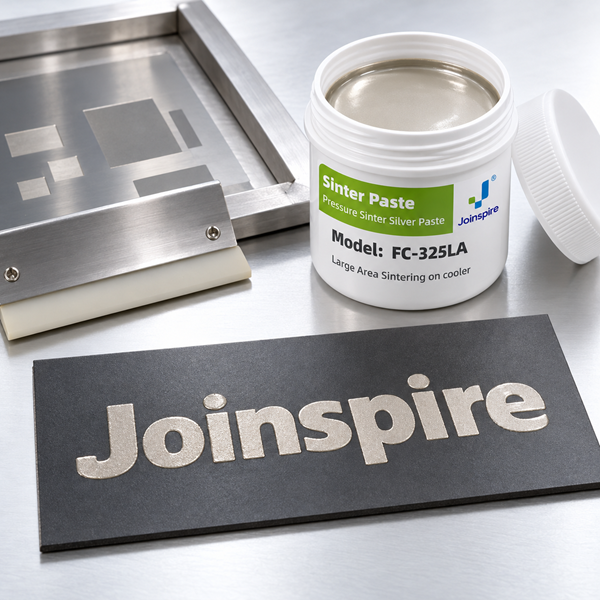
    As a new-generation chip interconnection material, sintered silver offers bonding reliability 10 times higher than solder alloys. Over the years, chip attach materials have been shifting from traditional solder alloys toward sintered silver.

    According to Mitsui Mining & Smelting, the market size of sintering materials is expected to reach around 80 billion yen, approximately RMB 3.651 billion, by 2035. This is about seven times the current scale.

    Market Outlook

    Sintering Materials Are Expected to Reach About 7× Current Market Size by 2035

    The shift from traditional solder alloys to sintered silver is being driven by higher reliability requirements in SiC, high-power electronics and advanced packaging applications.

    Jufeng Sintered Silver Demonstrates Strong Performance

    Jufeng is one of the domestic manufacturers that has achieved localization of sintered silver paste. With strong expertise in the field, Jufeng’s products demonstrate excellent processing performance and combine high performance with cost competitiveness.

    Compared with traditional gold-tin solder, Jufeng sintered silver shows five major advantages.

    1. Higher Shear Strength

    Jufeng sintered silver delivers stronger mechanical performance and is suitable for higher-strength application scenarios.

    30-50 MPa

    Jufeng pressureless sintered silver shear strength

    65-90 MPa

    Jufeng pressure sintered silver shear strength

    30-60 MPa

    Gold-tin solder shear strength

    2. Lower Processing Temperature

    Jufeng sintered silver can be processed at 230℃-260℃, while gold-tin solder usually requires a processing temperature above 300℃.

    This lower processing temperature makes sintered silver suitable for more low-temperature processes and expands its application range.

    3. Higher Service Temperature

    Jufeng sintered silver has a melting point of up to 961℃, while the maximum service temperature of gold-tin solder is around 280℃.

    This gives sintered silver stronger performance in high-temperature operating environments.

    4. Higher Thermal Conductivity

    Jufeng sintered silver offers thermal conductivity above 200 W/mK, while gold-tin solder has thermal conductivity of only around 60 W/mK.

    The high thermal conductivity of sintered silver helps dissipate heat more effectively and improve the reliability of electronic devices.

    5. Stronger Interface Compatibility

    Sintered silver can be compatible with multiple interfaces, including gold, silver, copper, nickel, stainless steel, aluminum alloy and glass.

    By comparison, the melting point of gold-tin solder near the eutectic temperature is highly sensitive to composition. When the weight ratio of gold exceeds 80%, the melting point rises sharply.

    Sintered silver avoids the melting point increase caused by gold diffusion from the gold-plated layer, providing more stable process compatibility.

    Future Outlook: More Possibilities for Jufeng Sintered Silver

    In summary, sintered silver paste has broad application prospects in the electronics industry. As the industry continues to develop and innovate, sintered silver paste is expected to replace gold-tin solder in more applications and continue to support the progress of electronic technology.

    The launch of Jufeng sintered silver marks another innovation in electronic packaging materials. We look forward to seeing sintered silver bring more possibilities to the electronics industry.

    Share:

    CP-500FE Flexible Conductive Carbon Paste for Flexible Electronics Applications

    Green Innovation: Jufeng Pressureless Silver Sintering Technology Leads a New Trend in Joining Materials

    Related Article

    image
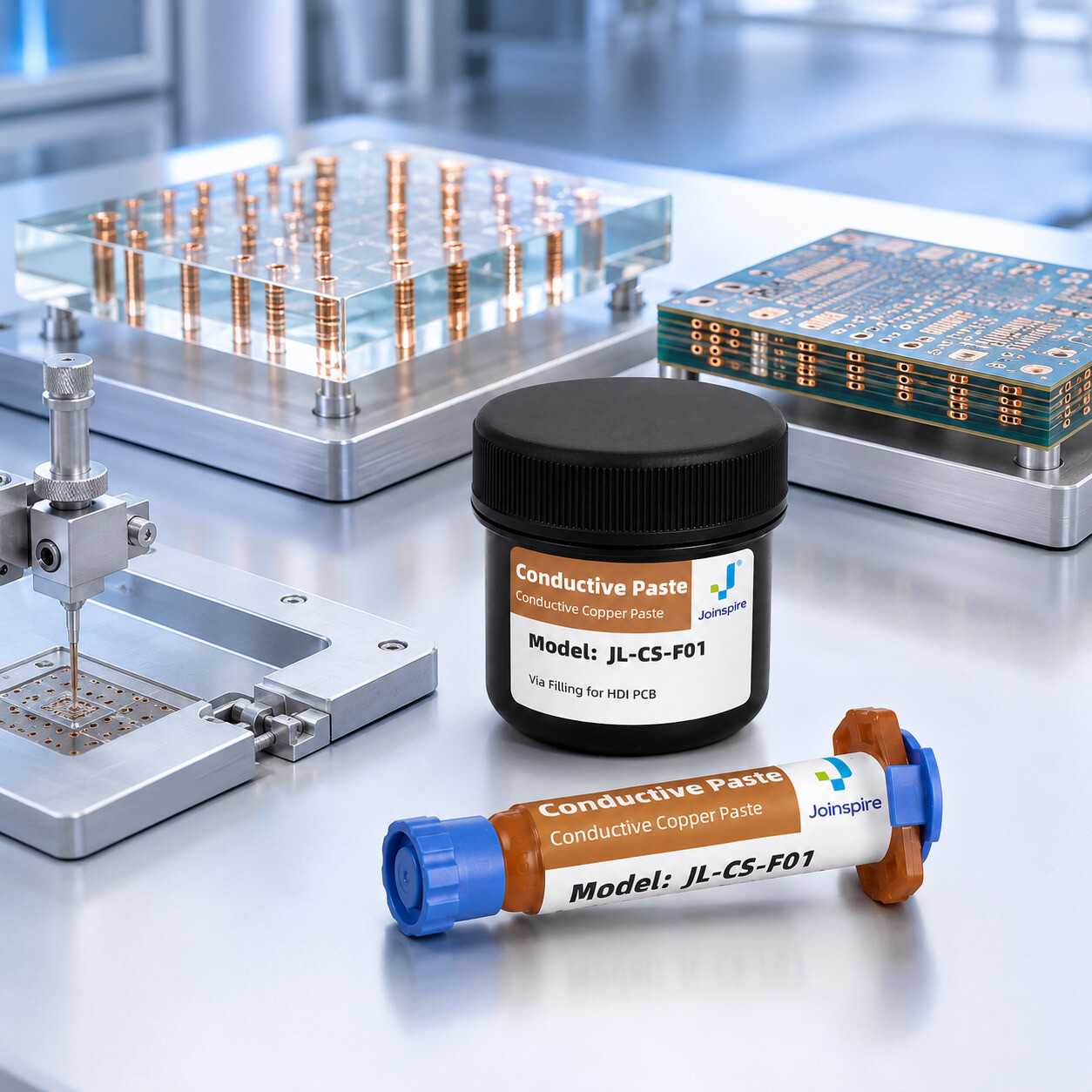
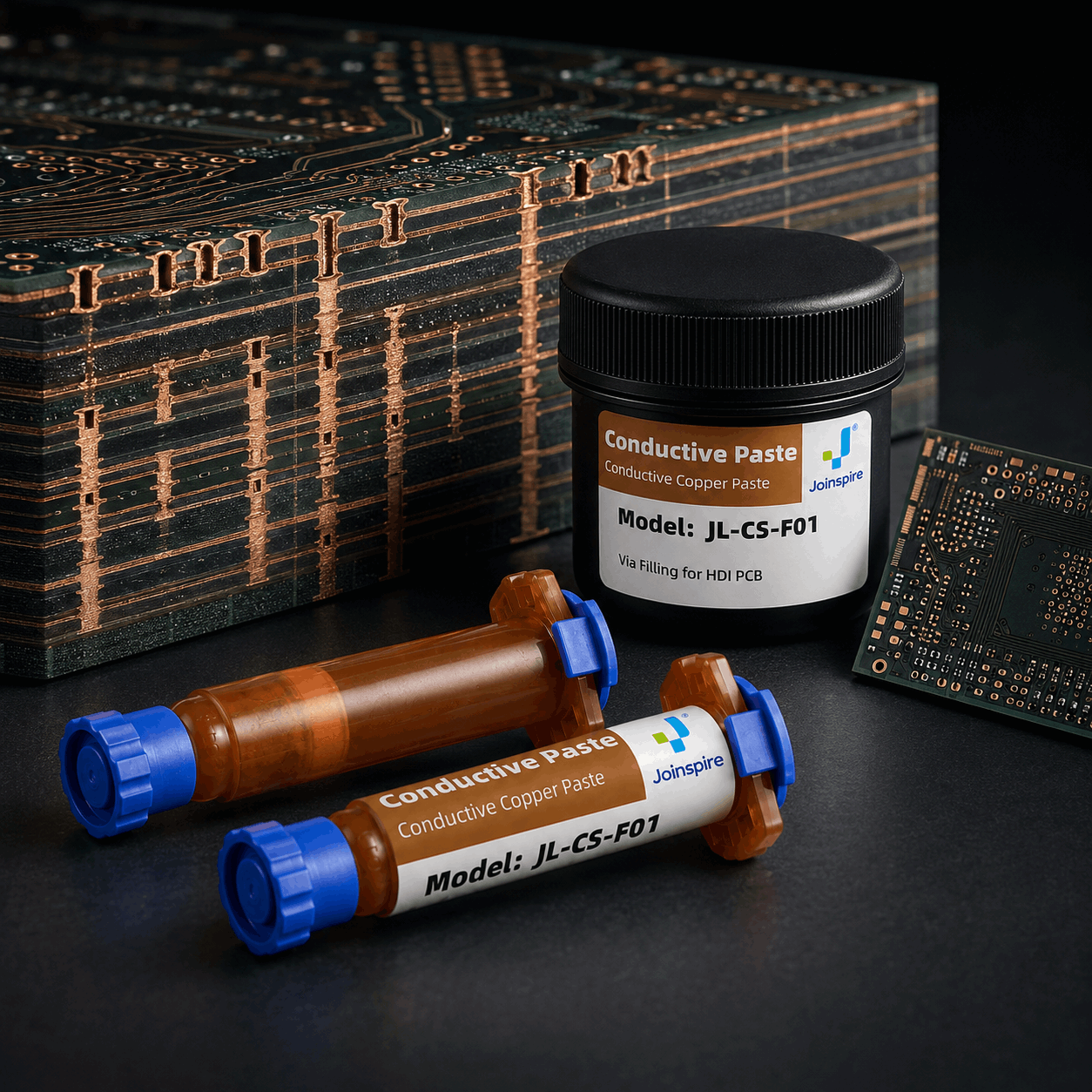
    Incomplete filling, cracks and unstable electrical resistance can turn a small via into a costly production problem. For manufacturers working on TGV and HDI designs, the goal is clear: fill the vias consistently and keep the connections stable through processing and use.

    Jufeng JL-CS-F01 copper via filling paste is a single-component conductive resin material developed for via plugging and filling.
    Copper Via Filling Paste for TGV and HDI: JL-CS-F01
    2026-09-04
    image
    Accurate solder volume is essential when joint dimensions, placement and repeatability matter. This guide explains how to select the right solder preform by alloy, size, shape, flux option and packaging method—and what information to provide when requesting a custom solution.
    How to Choose the Right Solder Preforms for Precision Soldering
    2026-08-19
    image
    When engineers, purchasing teams, or SMT manufacturers evaluate lead-free solder paste options, one question comes up again and again:

    Why does SAC305 keep showing up as the default recommendation?
    Why Is SAC305 Solder Paste So Widely Used?
    2026-08-06
    image
    If a 0201 component, miniature sensor lead or tiny PCB pad keeps flooding with solder, the problem may not be your hand, your iron or your temperature setting. The solder wire itself may simply be too thick for the joint.
    Why Can’t I Solder Tiny SMD Components? 0.1mm Ultra-Fine Solder Wire Explained
    2026-07-22

    HOME

    About us

    news

    connect us

    SiteMap
    Copyright © 2021 King Theme v2. Powered by web
    (387759)
    0
    Service

    WhatsApp
    Email
    Inquiry