Beyond Lead-Free: Joinspire PL-02U Pressureless Copper Sinter Paste Supports SiC & GaN Technology Upgrades
With the rapid development of silicon carbide and gallium nitride power devices, the selection of packaging materials has become a serious challenge for engineers.
If traditional high-lead solder is still used, its limited thermal conductivity of less than 50 W/m·K and shear strength below 30 MPa have become bottlenecks for improving power density and reliability. More importantly, its lead-containing nature runs counter to increasingly strict global environmental regulations such as RoHS.
Against this background, more and more companies are turning their attention to sintered copper, an ideal solution that combines performance advantages with cost competitiveness.

The Core Barrier: Copper Oxidation
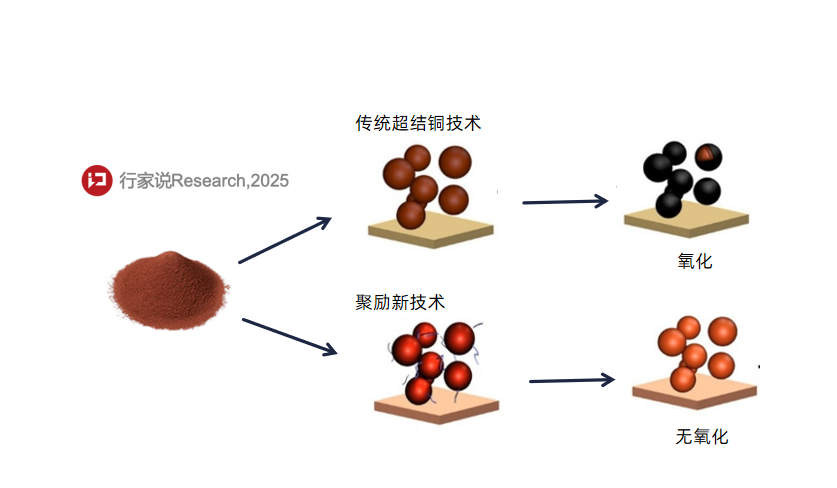
The development of sintered copper is not an easy path. The industry-recognized technical bottleneck lies in the high activity of copper powder. Copper powder can easily oxidize in air, resulting in rapid performance degradation and a significantly shortened storage and application window.
Joinspire Breaks Through the Oxidation Challenge
With breakthroughs in core technology, Joinspire has successfully overcome this industry challenge.
Joinspire PL-02U pressureless copper sinter paste adopts innovative anti-oxidation technology to solve the long-standing copper oxidation problem. In a normal-temperature air environment at 25℃, the product demonstrates excellent storage stability.
This not only makes long-term storage and convenient room-temperature transportation possible, but also paves the way for the large-scale application of sintered copper solutions.

Four Core Advantages of PL-02U
Excellent Thermal and Electrical Conductivity with Reliable Bonding
PL-02U provides strong thermal and electrical performance together with reliable bonding strength, making it suitable for high-reliability chip-level attachment.
- Excellent anti-electromigration performance for high-reliability requirements.
- Dense sintered interface with no voids or delamination in C-SAM testing.
Copper-Based Solution with Strong Cost Competitiveness
With silver prices remaining at high levels, the application cost of silver-based materials has increased significantly. In comparison, PL-02U uses more cost-effective copper-based materials, providing enterprises with a reliable choice that maintains high performance while improving cost efficiency.
Compatible with Dispensing and Printing for Stable Production
PL-02U features excellent forming stability and is compatible with high-precision dispensing and printing processes. It supports continuous and stable dispensing or printing operations, effectively helping avoid defects such as overflow and collapse while ensuring production efficiency and product yield.
Lead-Free, Halogen-Free and Compliant with International Standards
PL-02U adopts an environmentally friendly formulation. It is lead-free and halogen-free, fully meeting international environmental standards such as RoHS and REACH.
A Material Upgrade Path for Next-Generation Power Devices
Today, facing increasingly strict environmental regulations and continuously rising performance requirements, traditional high-lead solder is becoming difficult to adapt to the development of next-generation power devices.
Joinspire PL-02U pressureless copper sinter paste provides the power device industry with a leap-forward material upgrade path through its green lead-free advantages and excellent thermal and electrical conductivity.
It is not only an ideal choice for enterprises responding to environmental challenges, but also a key material for improving device reliability, providing strong support for more power device products moving toward higher performance.

PL-02U Pressureless Copper Sinter Paste
A lead-free, halogen-free and cost-competitive copper sintering solution for SiC, GaN and high-reliability power device packaging.
Jufeng Bare-Copper Pressure Silver Sinter Paste Helps Reduce Costs for Automotive-Grade SiC Power Modules
Farewell to Traditional Etching: Jufeng Solderable Conductive Copper Paste Usher in a New Era of Green RFID Manufacturing
Related Article