Farewell to Traditional Etching: Jufeng Solderable Conductive Copper Paste Usher in a New Era of Green RFID Manufacturing
In the era of the Internet of Things, RFID tags have become the “digital heart” of modern logistics, retail and supply chain management. However, behind this rapid growth, traditional aluminum etching processes are facing increasing environmental pressure.
High acid-washing costs, heavy metal pollution and material waste are pushing the industry to seek a more efficient and environmentally friendly alternative.
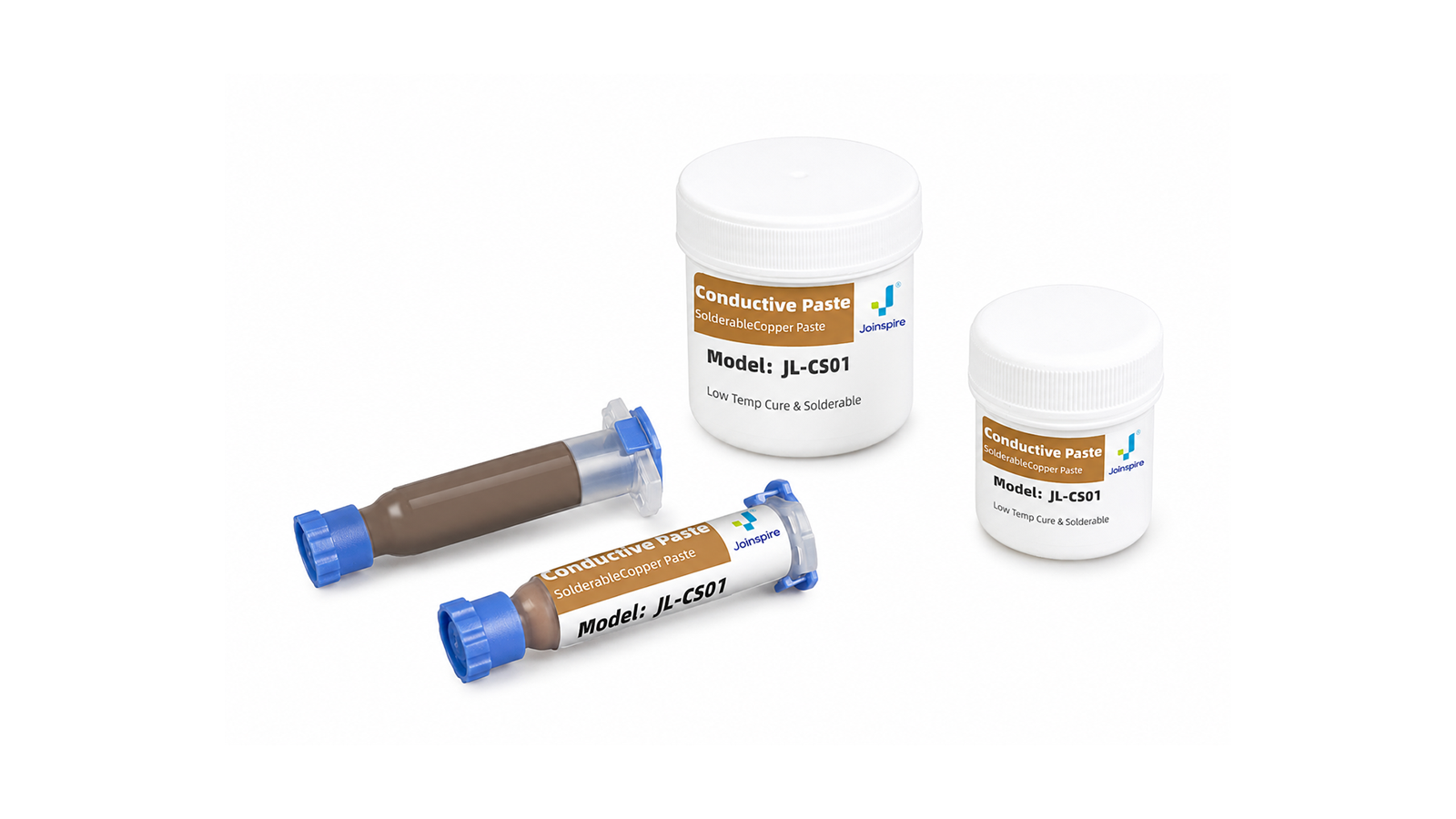
Against this background, Jufeng JL-CS01 solderable conductive copper paste is emerging as a breakthrough material for RFID manufacturing, thanks to its excellent conductivity, significant cost advantage compared with conductive silver paste, and strong compatibility with existing chip mounting processes.

Why Copper Paste? From Conductive Silver Paste to Solderable Copper Paste
For a long time, the printed electronics industry has relied heavily on conductive silver paste. However, the high price of silver paste and its susceptibility to electromigration have limited its use in large-scale, low-cost RFID tag production.
Compared with silver paste, conductive copper paste offers several clear advantages:
Outstanding Cost Performance
The raw material cost of copper is only a fraction of that of silver, providing a practical material foundation for ultra-low-cost RFID tag mass production.
Excellent Solderability
Most traditional conductive pastes rely on conductive adhesive for chip connection, while solderable copper paste supports standard solder paste bonding for stronger and more stable electrical connection.
Stable Electrical Performance
With special anti-oxidation treatment, JL-CS01 effectively addresses the oxidation issue of copper and helps maintain long-distance and stable RF signal transmission.
Core Application Scenario: The Printing Revolution of RFID Tags
Based on the core technical advantages of solderable conductive copper paste, RFID tag manufacturing can shift from complex traditional processes to a more efficient and convenient production model.
1. Antenna Printing: A One-Step Manufacturing Process
Using screen printing or gravure printing technology, solderable copper paste can quickly form antenna patterns directly on PET, paper and even fabric substrates. Compared with the traditional “copper-clad or aluminum-clad substrate + masking + etching” process, printing can reduce more than 80% of process steps.
2. Chip Mounting: From Adhesive Bonding to Soldering
The weakest point in RFID tags is often the connection between the chip and the antenna. With solderable copper paste, production lines can directly use standard SMT surface mounting processes.
The intermetallic compound formed by soldering provides much higher strength than conductive adhesive, helping the tag withstand compression, folding and other harsh physical conditions during logistics and transportation.


Solving Industry Pain Points: Technical Strength of Solderable Conductive Copper Paste
There are many conductive pastes on the market, but very few can truly combine high conductivity, solderability and oxidation resistance. Jufeng JL-CS01 solderable conductive copper paste achieves breakthroughs in the following three dimensions:
1. Balance Between Low-Temperature Curing and High Conductivity
Jufeng JL-CS01 solderable copper paste can be rapidly cured at around 150°C. This helps protect PET substrates that are highly sensitive to temperature, while achieving a volume resistivity of ≤85×10-5 Ω·cm, ensuring antenna gain performance.
2. Proprietary Surface Reduction Technology
Oxidation is one of the biggest challenges for copper paste. Jufeng adds a special organic coating layer during powder development. During curing, this coating can reduce the slight oxide film on the copper surface in situ, providing a soldering interface close to pure copper. This improves solder paste wettability and helps prevent component detachment and weak solder joints after soldering.
3. Excellent Flexibility and Adhesion
RFID tags often face bending during use. By introducing a modified resin system, JL-CS01 forms a film with excellent flexibility. After thousands of bending cycles, the resistance change rate remains within 10%, making it well suited for applications such as express waybills and garment hang tags.


Economic and Environmental Benefits
JL-CS01 solderable conductive copper paste not only breaks through technical bottlenecks, but also provides dual benefits in cost efficiency and environmental compliance.
Cost Reduction
The solderable conductive copper paste printing solution can reduce overall raw material cost by 20%-30% compared with silver paste. Compared with aluminum etching, it also offers higher turnover efficiency for small-batch and multi-variety production, while reducing wastewater treatment costs.
Green Manufacturing
Copper paste printing simplifies the production process and avoids highly corrosive raw materials. The process is low-pollution and low-emission, reducing environmental impact and supporting low-carbon manufacturing.
Conclusion: Embracing the Future of Printed Electronics
The future of RFID does not lie in complex subtraction through etching, but in precise addition through printing. Solderable conductive copper paste is not only a new material, but also a bridge connecting traditional manufacturing with the digital era.
Whether you are an established RFID manufacturer or an electronic component supplier seeking differentiated competitiveness, switching to solderable copper paste is a forward-looking step toward future green trade requirements. Join us in defining the next generation of RFID tag manufacturing standards.
JL-CS01 Solderable Conductive Copper Paste
Designed for RFID antenna printing, chip soldering, flexible printed electronics and other green manufacturing applications.
Beyond Lead-Free: Joinspire PL-02U Pressureless Copper Sinter Paste Supports SiC & GaN Technology Upgrades
Jufeng Launches Key Large‑Area Silver Sintering Technology for SiC Power Modules
Related Article